
HOW TO SET UP YOUR LIGHT SHEET MICROSCOPE FOR WHOLE BRAIN IMAGING AT SCALE
In the last decade, light sheet microscopes have evolved to become increasingly fast. Modern systems can now scan a mouse brain in minutes rather than hours, and the amount of data they generate is staggering. A single microscope can easily fill a server with data within weeks. It is therefore important to consider the intended endpoint and configure the scan to record only the data needed for subsequent analyses. Don't fall into the trap of scanning at maximum resolution.
Below, we share key insights and practical strategies drawn from our experience implementing light sheet microscopy at scale.
You can also download the exact settings we use for whole mouse brain c-Fos imaging
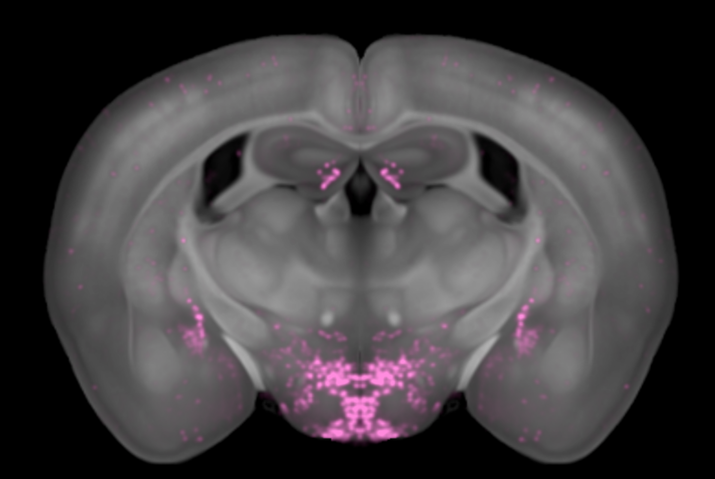
TAKE THE TEST
FIND OUT IF WHOLE BRAIN IMAGING CAN ACCELERATE YOUR RESEARCH.
From tissue clearing and light sheet microscopy to spatial transcriptomics, single-cell sequencing and traditional immunohistochemistry, neuroscientists today have more tools than ever to study the brain. The challenge is no longer access to technology. It's knowing which approach will actually answer your research question. Each method has trade-offs in resolution, throughput, coverage and cost, and choosing the wrong one can mean months of work that misses the biology that matters most. Whole brain imaging is transforming how researchers map activity, track drug distribution and uncover circuitry, but it's not the right fit for every question. Take the test to find out whether whole-brain imaging can accelerate your research.
USING LSFM FOR IMAGING OF MOUSE BRAINS
There are numerous companies that make light sheet microscopes, ranging from commercial providers such as Miltenyi, LifeCanvas, Bruker, Zeiss, and 3i to open-source systems like MesoSPIM. What they all share is the ability to scan an entire mouse brain at micrometre resolution within minutes or hours, depending on the settings. For many scientists, this capability opens an extraordinary window into the beauty and complexity of the brain. Today neuroscientists can visualize individual neuronal axons as well as the intricate projections of astrocytes and microglia, revealing structures that were once difficult to access.
SOMETIMES LESS IS MORE
Thanks to the resolution and speed offered by modern light sheet microscopes, it is easy for scientists to fall into the trap of scanning samples at too high a resolution. Because of the volumetric nature of the data, storage requirements increase dramatically with higher resolution. For example, a dataset scanned at 5 µm isotropic resolution is roughly eight times larger than one scanned at 10 µm. This may be manageable for one or two brains, but for larger studies, it is worth considering the intended endpoint and performing a few test scans. Keep in mind that subsequent analyses become difficult or impossible if the datasets are too large. The goal is to scan at a resolution that allows detection and segmentation of the objects of interest while avoiding unnecessary data. For instance, counting cell nuclei such as c-Fos can be reliably achieved at 5 µm isotropic resolution.
TIPS AND TRICKS FOR LIGHT SHEET MICROSCOPY
At Vibraint, most of the brains that we scan will enter our analysis pipeline for subsequent upload in CNS-Voyager™. Although we use a BLAZE ultramicroscope, it is possible to analyse and upload data from any light sheet system. However, some standardisation of the settings is required. Below are listed a few tips and tricks you can use to set up your scans, but if you are interested in using our analysis pipeline, please get in touch at contact@vibraint.dk.
-
What clearing method to choose? Once your samples have been processed, they will need to be cleared before they can be mounted in the light sheet microscope. There are many different clearing methods available, and although they all serve the same purpose, matching the refractive index of the tissue, their properties differ. Some cause the tissue to shrink, while others lead to expansion. This is important to consider if you wish to map your data to a reference atlas for quantification. At Vibraint, we use Dibenzyl Ether (DBE) or Ethyl Cinnamate (ECi) for clearing. Both DBE and ECi cause tissue shrinkage, so we map the samples to Perens' atlas (Perens et al., 2021). Currently, our analysis pipeline is optimised for brains that have been cleared with DBE or ECi.
-
Mounting your sample. When mounting the sample in the imaging chamber, it is essential to consider the orientation of the tissue, particularly if you wish to map the data afterwards. For the analysis to run smoothly, it is important that all brains are scanned in the same orientation and using illumination that ensures equal excitation in both hemispheres. Therefore, for horizontal scans, dual-sided illumination from both left and right is important, while sagittal and coronal scans can use one-sided illumination provided that the samples are well cleared.
-
Consider your endpoints. The endpoints you wish to quantify should determine the resolution of your scans. The smaller the endpoint, the more resolution is required to segment the signal. For structures such as cells or cell nuclei, a resolution of 5 µm (isotropic) is sufficient, while axons or vasculature require a resolution of 3 µm (isotropic).
-
Use the autofluorescence for mapping. To map the scans to a reference atlas, we use the autofluorescence channel. This can be scanned using shorter wavelengths such as 560 or 488. In the far red and near infrared spectrum, tissue autofluorescence is weaker, making it more difficult to use these for mapping. At Vibraint, we typically use the 560 channel to acquire the autofluorescence channel.
VIBRAINT'S LS-JOURNEY™ PLATFORM


We are here to help you get started
At Vibraint, we are passionate about whole brain imaging and light sheet microscopy. It's at the heart of everything we do. Our LS-Journey™ platform provides quantitative whole brain imaging as a service, offering end-to-end solutions from tissue labelling and clearing to light-sheet microscopy and AI-guided image analysis for segmentation and atlas registration. Each step can also be accessed individually to suit your research needs.
Whether you want to conduct your study with us or need expert advice to begin independently, we are here to help you unlock the amazing potential of whole brain imaging.
Download the microscope settings we use for whole brain c-Fos.
READY TO DESIGN YOUR WHOLE BRAIN STUDY WITH LS-JOURNEY™
Tell us your target markers, mouse model, sample numbers, and reporting needs, and our scientists will design the optimal module combination and provide a detailed quote.