
HOW TO GET STARTED WITH WHOLE BRAIN IHC
Whole-brain immunolabeling combined with tissue clearing and Light Sheet Fluorescence Microscopy (LSFM) is incredibly beautiful when it works. However, the protocols are often time-consuming, and many scientists struggle with antibody penetration and insufficient clearing of the tissue. At Vibraint, we have 30 years of combined experience in whole brain immunolabeling and tissue clearing and can help you get started.
Below you will find some tips and tricks to get you started with whole brain immunolabeling.
You can also download our most recent protocol for whole brain immunolabeling at the bottom of the page.
TAKE THE TEST
FIND OUT IF WHOLE BRAIN IMAGING CAN ACCELERATE YOUR RESEARCH.
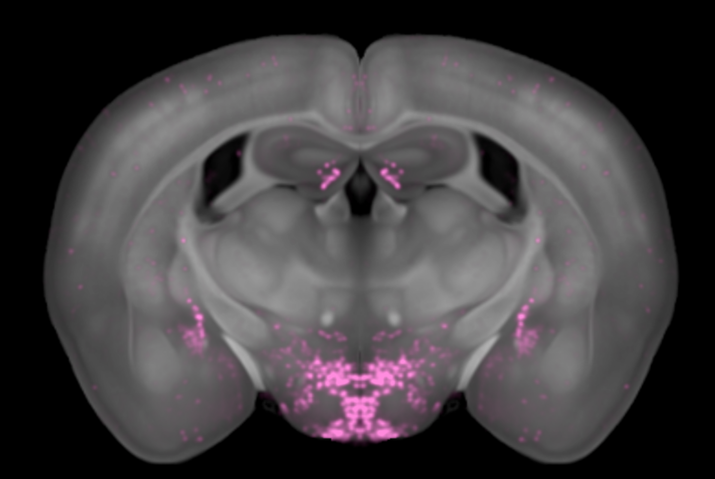
From tissue clearing and light sheet microscopy to spatial transcriptomics, single-cell sequencing and traditional immunohistochemistry, neuroscientists today have more tools than ever to study the brain. The challenge is no longer access to technology. It's knowing which approach will actually answer your research question. Each method has trade-offs in resolution, throughput, coverage and cost, and choosing the wrong one can mean months of work that misses the biology that matters most. Whole-brain imaging is transforming how researchers map activity, track drug distribution and uncover circuitry, but it's not the right fit for every question. Take the test to find out whether whole-brain imaging can accelerate your research.
WHOLE BRAIN IMAGING AT SINGLE CELL RESOLUTION
Whole-organ imaging combined with tissue clearing enables high-resolution, three-dimensional visualization of intact biological structures. Techniques such as CLARITY, iDISCO, CUBIC, and SHIELD render entire organs transparent while preserving molecular and structural integrity. When paired with light-sheet microscopy, it allows detailed mapping of neuronal circuits, vasculature, and cellular organization across whole tissues. This approach maintains spatial context, reduces artifacts from sectioning, and supports multiplexed molecular labelling. By integrating fluorescent signals from labelled molecules, genetic reporters, immunostaining and FISH, researchers can examine cellular identities and interactions at subcellular resolution, providing unprecedented insights into organ-level architecture, neural connectivity, and disease processes within their native biological context.
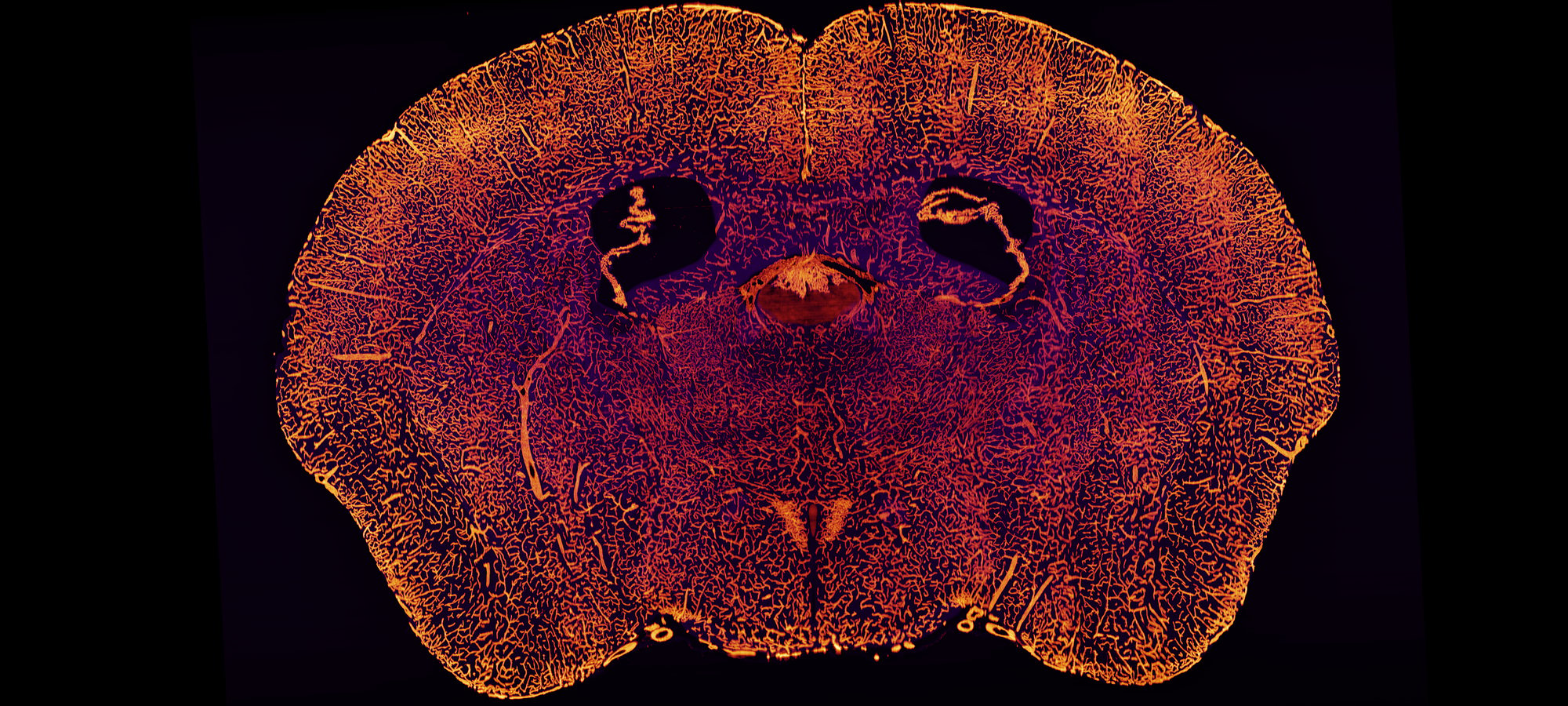
Antibodies against CD31 can be used to label the vasculature in the brain.
THE CHALLENGES
Despite its transformative potential, whole-organ imaging with tissue clearing faces several challenges. Many clearing protocols are time-consuming and require optimisation for different tissue types, leading to variability in transparency and molecular preservation. Large, cleared samples can be difficult to label uniformly due to limited antibody penetration, while fluorescent signals may degrade during clearing or imaging. Furthermore, the optimization of antibodies can be problematic and time-consuming. Even low levels of background signal add up when many optical sections are stacked on top of each other, resulting in long image processing times. Consequently, many scientists and students end up spending a lot of time optimizing protocols. At Vibraint, we have 30 years of combined experience in tissue processing and clearing, and we have tried to stain virtually all mouse organs and tissues from many other organisms. Below you can find some tips and tricks that can help you get started with whole-organ imaging.
TIPS AND TRICKS TO GET GOING
-
Positive controls?
When starting up whole-organ imaging, it is always a good idea to include a positive control antibody such as αSMA (vasculature) or TH (nerves). These antibodies can be purchased as directly conjugated reagents and work across multiple species. Since all tissues contain blood vessels and nerves, they will give a good indication of how well the reagents are working and if the antibodies are penetrating evenly throughout the tissue. Links to our favourite antibodies can be found in the protocol.
-
If possible, use directly conjugated antibodies.
When using a primary and a secondary antibody it is often necessary to optimize the concentration of both antibodies for a given endpoint which is time consuming and while it might increase sensitivity, it often leads to increased background as well. This can be avoided by using directly conjugated primaries. In addition, this opens up the possibility of using mouse primary antibodies in mouse tissue and it allows multiplexing of two or more antibodies from the same species.
-
Tissue quality is paramount.
For uniform labelling we prefer to perfusion fix the tissue with 4% paraformaldehyde. This fixative works with most antibodies and is compatible with RNA detection. It is also important to consider any downstream steps when harvesting the tissue. If you are working with brains and planning to register the samples to an atlas, the tissue needs to be of very high quality. Tears and cuts will affect both the registration and the signal intensity.
-
What are you labelling?
Getting an untested antibody to work with no background can be a tough place to start. And sometimes it is not even necessary. For example, if you are planning to label vasculature you can get similar results by injecting a lectin dye and letting it circulate for a few minutes before harvesting the tissue. We often look to 2-photon papers to find markers or dyes that could work as a surrogate for an antibody. This way, it is possible get off to a positive start. Then more difficult steps can be implemented later.
VIBRAINT'S LS-JOURNEY™ PLATFORM

We are here to help you get started
At Vibraint, we are passionate about whole brain imaging and light sheet microscopy and it's at the heart of everything we do. Our LS-Journey™ platform provides quantitative whole brain imaging as a service, offering end-to-end solutions from tissue labelling and clearing to light-sheet microscopy and AI-guided image analysis for segmentation and atlas registration. Each step can also be accessed individually to suit your research needs.
Whether you want to conduct your study with us or need expert advice to begin independently, we are here to help you unlock the amazing potential of whole brain imaging.
Download our detailed protocol for whole brain immunolabeling using directly conjugated antibodies.
READY TO DESIGN YOUR WHOLE BRAIN STUDY WITH LS-JOURNEY™
Tell us your target markers, mouse model, sample numbers, and reporting needs. Vibraint scientists will design the optimal module combination and provide a detailed quote.